

Key Takeaways
- Manufacturing executives are optimistic about growth in 2026, yet the organizations that succeed will be those aligning ambition with operational readiness.
- Technology, automation, and AI investments only pay off when built on a foundation of visibility.
- Growth strategies such as new markets, new products, or reshoring only succeed when supported by real‑time supply chain visibility, scenario modeling, and scalable operations.
Manufacturing leaders are entering 2026 with cautious confidence. While economic uncertainty persists, most executives believe they are positioned to grow. The 2026 Manufacturing & Distribution Outlook reveals a clear pattern: optimism is high, but success will depend on how well leaders align technology, automation, and supply chain with operational readiness.
The following takeaways highlight what matters most for manufacturing executives.
Discipline Will Determine Results
Manufacturers are focusing on long-term growth, with nearly 80% expressing strong confidence in their readiness to implement key growth strategies. This optimism comes despite ongoing economic uncertainty and evolving market conditions.
Central to this growth are key trends such as the implementation of new technologies, upgrades to machinery, and increased use of AI and automation.
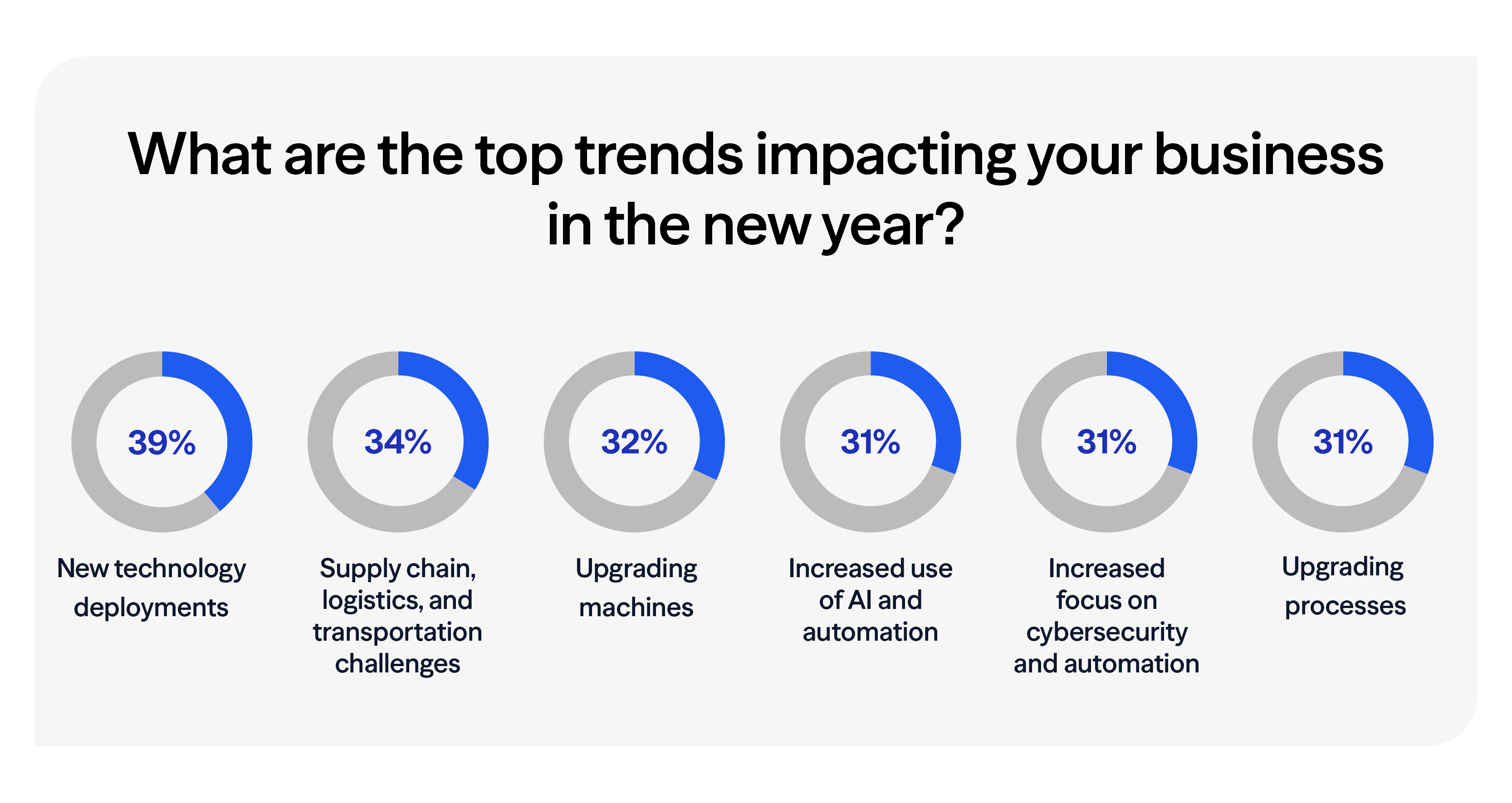
Manufacturers are at a pivotal point: those adapting growth strategies like entering new markets or releasing new products alongside emerging trends will progress, while others risk stagnation.
Technology is Accelerating, But Most Aren’t Truly Ready
More than 70% of mid-market manufacturers plan to increase spending on AI, advanced analytics, and business-critical systems like ERPs.
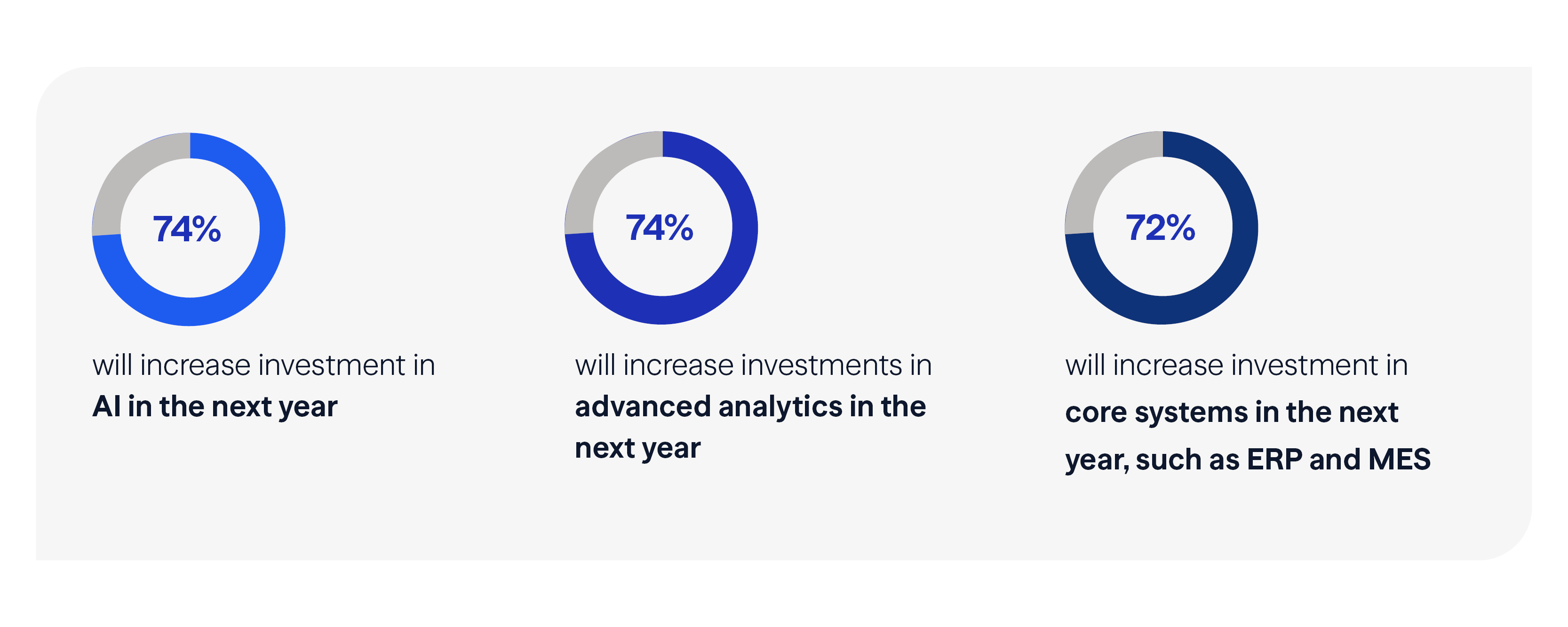
But here’s the reality: many manufacturers still run on outdated or legacy technologies that prevent them from getting the right information at the right time. And while two-thirds of companies completely agree (39%) or mostly agree (25%) that their current systems are AI-ready, there’s still work to be done.
Disconnected machines, inconsistent reporting, and outdated spreadsheets limit the accuracy and usefulness of AI models.
If you want AI to deliver real operational value, you need unified, trustworthy data behind it. Clean data should be an executive’s top priority. Learn more.
Automation Helps Support Workforce Shortages
Manufacturers continue to invest in digital automation, with more than 70% planning to increase investment in smart machines and IoT devices.
While technology investment is accelerating, automation’s real impact is being felt in how work gets done and how skilled labor is deployed. Automation eases high employee turnover by reconfiguring and augmenting workflows in production, warehouses, and the back office.
During workforce and skills shortages, automation becomes especially important. Over 80% of leaders expect production volumes to increase, while labor turnover among frontline employees remains high. Top-performing manufacturers must strategically prioritize staffing investments and maintain an up-to-date talent strategy to engage employees.
Re-engineer your Supply Chain with Visibility in Mind
Manufacturers and distributors continue to face familiar supply chain challenges, including rising transportation costs, supply delays, and trade disruptions.
Manufacturing leaders can increase supply chain efficiency by improving end-to-end visibility with AI and automation, and by ensuring up-to-date information through business-critical systems.
When visibility is top of mind, performance improvement follows. That’s why manufacturing leaders report improvement in on-time delivery, supplier collaboration, and material and component quality, availability, and price heading into 2026.
Plan Before You Expand
Almost 40% of mid-market manufacturers plan to expand into new markets or add new products to fuel growth. Further, 24% of manufacturers and distributors are near-shoring or reshoring production and sourcing.
However, expansion only works when you have the foundation to support growth. This includes:
- Integrated data systems
- Real-time supply chain visibility
- Scenario and cost modeling
- Automation and AI for quality and output
Building the foundation is critical for any type of expansion or reinvention. When one of our clients faced sudden tariff increases, they needed to onboard a U.S. warehouse in under a month. Their real-time response was successful due to early ERP implementation, scalable systems, and rapid integration and testing, which enabled the warehouse to launch in three weeks.
What Executives Should Do Differently in 2026
The manufacturing leaders best positioned for the future are not chasing every trend. They are aligning technology, automation, and supply chain decisions around visibility, disciplined execution, and scalable operations. Strategic, proactive steps, even in the face of the unknown, can help you be prepared for what comes next.
Eide Bailly provides strategies to build resilient supply chains, optimize costs, and embrace reshoring for long-term success. Connect with our manufacturing advisors today to discover how data-driven strategies, advanced technology solutions, and industry expertise can help your business optimize efficiency, minimize risk, and stay ahead of disruption.
Contact Eide Bailly Manufacturing Advisors | Access the 2026 Manufacturing Outlook Report
Frequently Asked Questions
What should manufacturing executives focus on most in 2026?
Manufacturing executives should prioritize aligning technology, automation, and supply chain decisions with operational readiness. Growth confidence is high, but disciplined execution and visibility into data, workflows, and supply chains will determine results.
Why is visibility such a critical theme for manufacturers in 2026?
Visibility enables better decisions earlier. Manufacturers with real‑time insight into inventory, production, costs, and supplier performance are better positioned to improve service levels, manage risk, and scale efficiently in uncertain conditions.
How should manufacturers think about AI and automation investments?
AI and automation should be treated as enablers, not strategies. The most successful manufacturers focus first on data quality, system integration, and workflow design before scaling advanced technologies.
How are supply chain strategies changing for manufacturing leaders?
Manufacturers are re‑engineering supply chains to improve end‑to‑end visibility, resilience, and responsiveness. Leaders are using integrated systems and automation to anticipate disruptions rather than react to them.
How does automation help address workforce shortages?
Automation reduces reliance on manual, repetitive work and allows skilled employees to focus on higher‑value activities. This helps manufacturers grow production without proportional increases in headcount during ongoing labor constraints.
What does “operational readiness” mean for manufacturers?
Operational readiness includes integrated systems, trusted data, standardized workflows, and the ability to model scenarios and costs. Without these elements, technology investments and expansion plans struggle to deliver value.

Rely on the trusted expertise of manufacturing advisors to help you build and execute your strategic vision.
Who We Are
Eide Bailly is a nationally ranked accounting and advisory firm bringing financial, operational, and technical solutions to middle market and high-growth organizations.
