

Key Takeaways
- AI and automation offer manufacturers growth opportunities, but success depends on establishing strong operational foundations.
- Investments in technology, especially AI, are a top priority for industry leaders aiming to modernize and scale.
- To adopt AI strategically, manufacturers must clearly define problems AI will solve, ensure high-quality and reliable data, and implement robust security measures.
Manufacturers are under growing pressure to adopt AI. But for many, the bigger risk isn’t moving too slowly. It’s moving too soon.
Without the right operational and data foundation, AI initiatives often lead to:
- Unreliable insights based on poor data.
- Disconnected tools that don’t scale.
- Wasted investments with limited ROI.
For mid-market manufacturers in particular, where systems are often partially integrated and processes vary across locations, AI can expose and amplify these gaps.
That’s why the most successful manufacturers don’t start with AI tools. They start by asking: Do we have the visibility, control, and data discipline required to make AI work?
Why AI Fails Without the Right Foundation
Manufacturers and distributors are increasing the use of AI, both to expand operations and streamline efficiencies.
In fact, nearly three-fourths of leaders report they will increase AI investment in the next 12 months. But adopting AI for its popularity will lead to issues long term. Forward-thinking manufacturers must focus on a strong foundation to move forward effectively with an AI strategy.
As you consider AI opportunities, ask:
- What specific problem(s) can be solved with AI?
- What is the quality of the data upon which AI will be trained?
- Are key security measures in place?
- Can AI usage be trialed and then expanded as company skills and experience with AI grow?
- Are KPIs in place to ensure AI success is met?
- What support will your company need?
- Learn more: AI Maturity for ROI: Assessing Governance, Risks, Systems, & Data [WEBINAR ON DEMAND]
Why ERP Readiness Is Critical for AI
For most manufacturers, ERP is the primary system that connects financial, operational, and supply chain data. When that foundation isn’t solid, AI models don’t have the context or consistency they need to deliver reliable insights.
Common ERP challenges we see in mid-market manufacturing include:
- Incomplete or inconsistent master data (customers, inventory, BOMs)
- Limited integration with MES, quality, and supply chain systems
- Reporting that relies on spreadsheets instead of system-driven data
- Processes that vary by plant or business unit
Before investing in AI, manufacturers need to ensure their ERP environment can:
- Provide a reliable system of record
- Support consistent processes across the organization
- Deliver accurate, timely data for decision-making
- Dive Deeper: ERP Replacement in the Age of AI
How to Prepare for AI
Here’s the truth: AI initiatives often fail because the business isn’t ready.
How to Prepare for AI
Here’s the truth: AI initiatives often fail because the business isn’t ready. Organizations often adopt AI before aligning goals, teams, and controls.
While more than 64% of executives surveyed completely or mostly agree that their current systems and machines are AI-ready, it’s still important to make sure the foundation is ready before implementing any type of new technology.
The most successful mid-market manufacturers avoid “AI for AI’s sake” and focus instead on:
- Automating the right tasks
- Improving accuracy and speed
- Freeing people to focus on higher value work
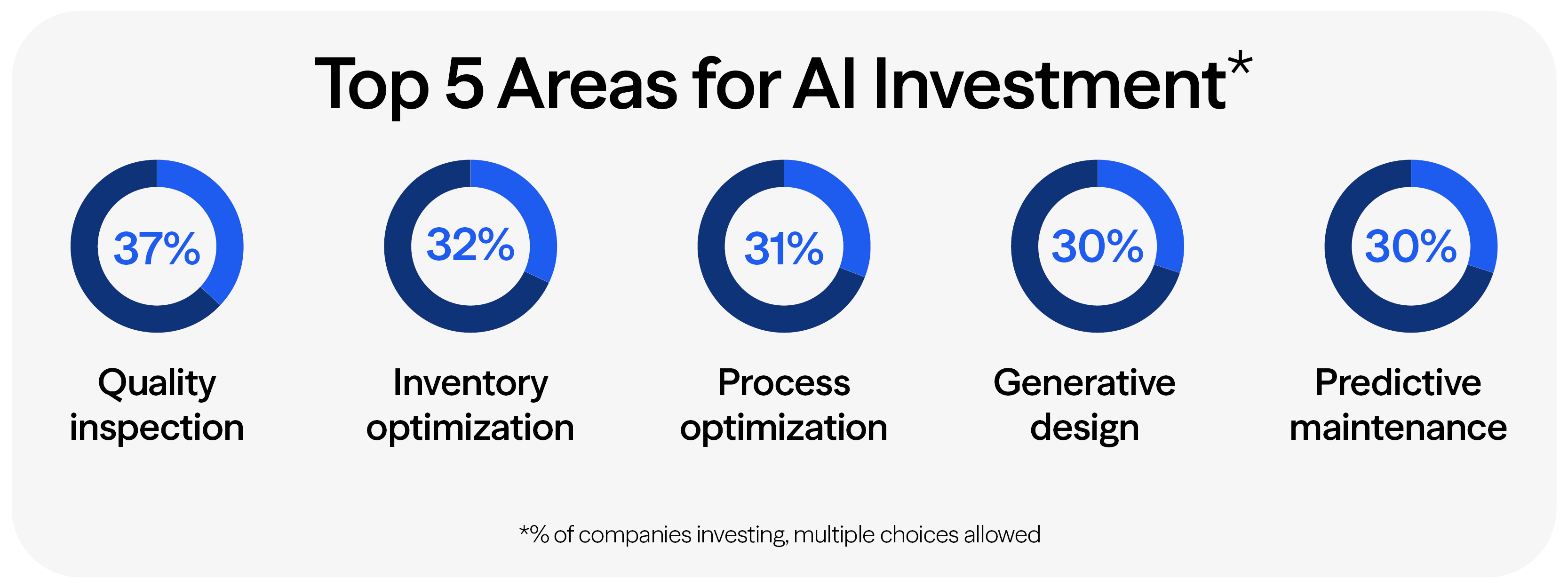
In the manufacturing space, top investment areas include quality inspection, predictive maintenance, and process optimization. Manufacturers also expect AI to drive sales demand and increase the productivity of back-office processes in the next three years.
Visibility
Visibility is one of the strongest determinants of success or failure in AI implementations. After all, AI is only as good as the data it’s based on.
The key to data quality is the need for a single source of truth. This begins with understanding your current systems and whether they’re capable of aligning with AI implementations.
Over 70% of manufacturing leaders are increasing investment in core systems and technologies such as ERP, advanced analytics, industrial automation and robotics, smart machines, and IoT.
Control
Reinforcing strong risk- and data-management practices will improve ROI not only for AI, but for systems and machines to which AI is added. Make sure you have strong governance in place, prioritize security, and pay close attention to risk management.
75% of leaders plan to increase cybersecurity investment in 2026, compared with just 25% in the 2025 Outlook survey.
Capability
Workforce readiness, change management, and ownership clarity are all essential, and often forgotten, pieces of an AI implementation.
Manufacturers should:
- Create a cross-functional team to help guide any AI transition
- Actively communicate the benefits
- Seek employee feedback
- Make sure your people are trained in digital literacy
Our research found that 61% are upskilling and reskilling their employees in the latest technologies.
AI Maturity Model
Most organizations believe they’re AI ready. In practice, many are still in early stages of data readiness and governance — which limits ROI and increases risk.
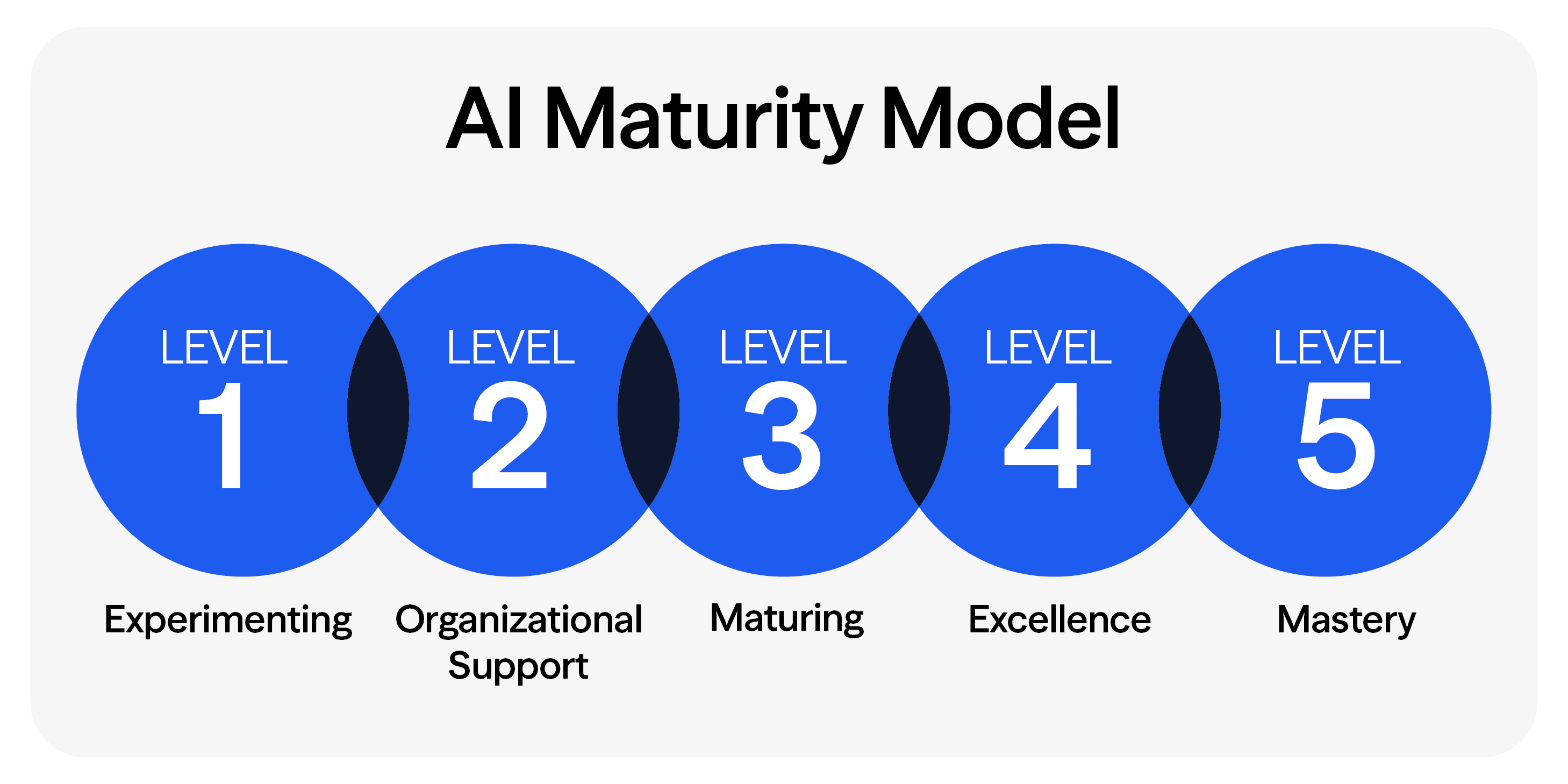
To help manufacturers assess where they stand, we use a five-stage maturity model that connects AI goals to risk, business, and technology outcomes. Assess your AI maturity across the following areas:
| Risk | Business | Technology |
|---|---|---|
| Governance | Change management | Data readiness |
| Model | Workforce AI education | Supporting tech stack |
| Security | Governance | DevOps |
| Compliance | Impact | Team composition |
| Data | ROI |
AI in Action: AI and Quality Inspection
Quality inspection is one of the most practical and high impact applications of AI in manufacturing today.
Unlike more experimental use cases, AI driven quality inspection addresses a well defined problem: detecting defects consistently, at speed, and at scale. Traditional inspection methods struggle with fatigue, variability, and the increasing complexity of modern products.
AI powered vision systems use machine learning to analyze images from production lines in real time, identifying surface defects, dimensional issues, and assembly errors with a level of consistency that human inspection cannot sustain.
For manufacturers, the value is immediate and measurable:
- Earlier defect detection, reducing scrap, rework, and warranty exposure
- Improved consistency, ensuring every part is evaluated to the same standard
- Higher throughput, without slowing production lines
- Better traceability, with inspection data logged for audits and process improvement
Managing AI for Optimal Advantage
Manufacturing leaders are embracing AI as an enabler — not a replacement — for existing systems, processes, and employees.
But there are critical considerations as you prepare to implement AI in your organization. And that begins with readiness before you introduce any type of tool.
Connect with our manufacturing advisors today to discover how data-driven strategies, advanced technology solutions, and industry expertise can help your business optimize efficiency, minimize risk, and stay ahead of disruption.
Contact Eide Bailly Manufacturing Advisors | Access the 2026 Manufacturing Outlook Report
Frequently Asked Questions
What is the best place for manufacturers to start with AI?
For most manufacturers, quality inspection is the most effective starting point. It addresses a clear operational problem, delivers measurable ROI, and helps organizations build the data discipline, controls, and visibility required for broader AI adoption.
Why does AI fail in manufacturing environments?
AI initiatives often fail when organizations invest in tools before fixing foundational issues such as data quality, system integration, governance, and workforce readiness. Without visibility, control, and clear ownership, even advanced AI solutions struggle to deliver value.
How does AI improve quality inspection in manufacturing?
AI driven quality inspection uses machine learning and computer vision to detect defects consistently and at production speed. This helps manufacturers reduce scrap and rework, improve consistency, increase throughput, and capture inspection data that supports root cause analysis and continuous improvement.
Do manufacturers need perfect data before using AI?
No — but they do need reliable, well governed data. AI works best when organizations establish a clear source of truth, define acceptable variation, and apply basic data governance. Improving data quality is often an outcome of successful early AI use cases, not a prerequisite for perfection.
Is AI replacing workers in manufacturing?
In most manufacturing environments, AI augments workers rather than replaces them. AI handles repetitive, high volume inspection and analysis tasks, allowing teams to focus on higher value activities like process optimization, problem solving, and decision making.
What risks should manufacturers consider when adopting AI?
Key risks include poor data governance, cybersecurity exposure, lack of clear ownership, and insufficient change management. Manufacturers should treat AI as part of their broader risk and control environment, ensuring proper oversight, security, and accountability from the start.
How should manufacturers evaluate AI readiness?
Manufacturers should assess readiness across three areas: visibility - data quality, system integration, and reporting clarity; control - governance, security, and risk management; capability - workforce readiness, change management, and leadership ownership. Balanced readiness across all three areas leads to stronger outcomes.
How does AI fit into long term manufacturing strategy?
AI should support strategic goals such as scalability, resilience, and margin improvement. Organizations that view AI as an enabler—rather than a standalone initiative—are better positioned to adapt to market shifts, customer expectations, and operational complexity.
How can manufacturing leaders avoid “AI for AI’s sake”?
By starting with clearly defined business problems, prioritizing foundational readiness, and measuring success through operational and financial outcomes. Manufacturers that lead with discipline consistently outperform those that chase technology trends.

Rely on the trusted expertise of manufacturing advisors to help you build and execute your strategic vision.
Empower your team with AI and automation solutions built for growth. Unlock your full potential.
Who We Are
Eide Bailly is a nationally ranked accounting and advisory firm bringing financial, operational, and technical solutions to middle market and high-growth organizations.