

Key Takeaways
- The OBBBA tweaked a longstanding concern about how some expenses are allocated against foreign income.
- In a recent release, Treasury took up some of the remaining questions raised by the new law.
- There’s still more taxpayers would like to see to make the U.S. international framework less onerous.
- The proposed regulations indicate a different view of rulemaking from the administration.
- Other news: Businesses urge Ireland to expand credits.
Aside from making permanent many expiring sections of the tax code, the 2025 One Big Beautiful Bill Act also fine-tuned many tax laws with tweaks that practitioners and taxpayers had long been calling for—especially in the international framework.
But every adjustment is bound to bring on more questions.
For instance, in converting the previous tax on global intangible low-taxed income (GILTI) to the net CFC tested income (NCTI) regime, Congress also addressed some—although not all—of the issues that taxpayers had raised about the minimum tax on foreign income.
One of the most anticipated changes was to provide relief on foreign tax credit limits applied to GILTI/NCTI, which can drastically increase the tax liability even when substantial foreign tax had already been paid. This often occurred due to the allocation of business interest and research and development expenses to foreign income, decreasing the amount of foreign profit recorded when calculating the foreign tax credit limits. The less foreign profit a company shows as a percentage of its total income, the tighter those limits apply.
The OBBBA included a provision specifying that interest and R&D deductions would only be apportioned to a company’s foreign income if they were “directly allocable” to that income–with business interest and R&D explicitly excluded.
This solved the problem, but raised another question—what does “directly allocable” mean?
Treasury addressed this issue in recent proposed regulations, stating that while “directly allocable” isn’t defined in the tax code, it implies a “closer relationship” than when deductions are merely “properly allocable.” It doesn’t include deductions allocated by formula but can include currency losses, according to Treasury.
It also won’t include stewardship expenses, or the costs involved in overseeing a corporation.
The release has provided welcome clarity to taxpayers but has raised additional issues as well–including relief for when an overall domestic loss is apportioned against foreign income.
As noted above, the OBBBA did not address all of the issues that taxpayers have raised about the TCJA’s international tax system. One of the biggest complaints has been that net operating losses and excess foreign tax credits cannot be carried forward against GILTI/NCTI—something that even the Organization for Economic Cooperation and Development’s global minimum tax allows for.
Rep. Ron Estes, R-Kansas, released proposed legislation last week to allow some carryforwards, and make other tweaks to the system, including eliminating a 10 percent haircut on foreign tax credits used against NCTI and to narrow when the base erosion and anti-abuse tax applies.
There could be bipartisan agreement that these changes could make the U.S. international tax framework run more smoothly. But agreeing on how to make up the lost revenue is another story.
Noteworthy Items This Week
Multinationals Seek Expansion of Ireland’s R&D Tax Credits – Ryan Hogg, Bloomberg Tax ($):
The push comes ahead of Ireland’s October budget set to be released Oct. 6. Businesses say the expanded credit is needed as new policies threaten to increase cash tax liabilities for companies in Ireland and potentially hurt the country’s status as a hub for lucrative intellectual property.
“If it supports the project as a whole remaining in Ireland, or being in Ireland in the first place, then that’s a benefit for the state,” said Gerard Brady, head of national policy and chief economist at Irish business lobby Ibec.
Australia’s Plan To Tax Discretionary Trusts Meets Opposition – Deborah Nesbitt, Bloomberg Tax ($):
The proposed 30% minimum tax on discretionary trusts would make the system fairer by “better aligning the tax rate on trust income with tax rates paid by workers,” according to a Treasury paper explaining the changes, which were announced in the 2026-2027 budget.
VAT Treatment of Transfer Pricing Adjustments – Lee A. Sheppard, Tax Notes ($):
The question of VAT treatment of transfer pricing adjustments is a long-standing, acknowledged, common question. There is general consensus on the public and private sides that government-initiated transfer pricing adjustments for income tax purposes should not affect VAT filing or liability, but that’s as far as it goes.
The current refund tangle illustrates why the system isn’t equitable. Some companies are returning money to vendors while others are using refunds to pay down debt, invest in their business, or reward workers. Still others have lowered prices or offered temporary promotions.
Public Domain Superhero of the Week
Every week, a new character from the Golden Age of Comics, who’s fallen out of use.
This week’s entry: Dan Hastings
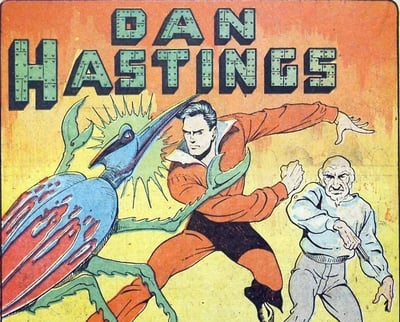
Debut Year: 1937
Debut Publication: Star Comics #1
Origin Story: An Earth-based officer in the Interplanetary Police, he battles both terrestrial and extraterrestrial threats.
Superpowers: Aside from his natural abilities, he's aided by rocket boots and a ray gun.
Eide Bailly's International Tax Team and our affiliates at HLB, The Global Advisory and Accounting Network, stand ready to assist with your worldwide tax needs.