
Key Takeaways
-
In this four‑part series, we lay out the playbook for state and local tax credits and incentives—and why they’ve become such a powerful tool for businesses.
- Part II explores how SALT credits and incentives impact different industries—and which sectors stand to benefit the most.
- Complete the State Credits & Incentives Request for Assessment if you have a project you'd like to discuss with Matt Carlson.
In Part I of our SALT Credits & Incentives series, we set the foundation by explaining what state and local tax credits and incentives are, why states offer them, and why they remain one of the most overlooked planning opportunities for businesses. We highlighted how these programs are designed to encourage investment, job creation, and expansion—while helping businesses reduce costs, improve cash flow, and strengthen project economics. With that groundwork in place, the focus now shifts to who can actually take advantage of these opportunities. State and local credits and incentives programs are economic development tools, not neutral tax provisions. As a result, industries benefit more when they:
- Make large, visible capital investments
- Create full time, higher wage jobs
- Are mobile (can choose between states)
- Align with policy priorities (manufacturing, energy, innovation, workforce development)
This is reflected across statutory and discretionary incentive programs.
Industries that Most Consistently Benefit
While credits and incentives are available across many sectors, certain industries consistently rise to the top because they most closely align with state and local economic development goals—job creation, capital investment, innovation, and long term economic impact.
1. Manufacturing (including Advanced Manufacturing)
Manufacturing is, by far, the most favored industry across state and local incentive programs as seen in our case study. Large capital investments, meaningful employment growth, and long term community presence make manufacturing projects highly attractive to states competing for economic development. For example, Oregon lawmakers are considering expanding advanced manufacturing incentives.
Advanced Manufacturing Tax Breaks Pitched To Ore. Panel – Sanjay Talwani, Law360 ($):
Under an amendment proposed for S.B. 1586, heard by the Senate Finance and Revenue Committee, Oregon would create a new advanced manufacturing tax credit, expand availability of its existing research and development tax credit for semiconductor manufacturers and allow new local property tax breaks for advanced manufacturing equipment.
Manufacturing projects stand out due to:
- Significant capital expenditures for facilities and equipment
- Job creation across multiple skill levels
- Long term operational commitments
- Broader supply chain and export impacts
Common incentives include investment tax credits, long term property tax abatements, sales and use tax exemptions on equipment and construction materials, job creation credits or payroll withholding retention, workforce training grants, and utility sales tax exemptions.
In practice, incentive value is often driven more by up‑front facility investment than by ongoing wages. As a result, a $50 million manufacturing facility with moderate hiring can generate greater total incentives than a $5 million office project with higher wages once programs are fully modeled. Well‑known examples include the Georgia Job Tax Credit, Kansas’s PEAK (Promoting Employment Across Kansas) program, and the Texas Enterprise Zone Program.
2. Distribution, Logistics, and Warehousing
Distribution, logistics, and warehousing projects often receive incentive treatment similar to manufacturing, particularly when located in transportation corridors or rural areas where states are actively competing for facilities.
States support these projects because they offer scalable job creation, strategic location value, and immediate economic and infrastructure impact. Common incentives include job creation credits, property tax abatements, infrastructure assistance, sales tax exemptions on equipment, and discretionary grants. Examples include Missouri Works, Georgia Job Tax Credit, Kansas PEAK, and the Texas Enterprise Zone Program.
Indiana Awarding $2.5M in Tax Credits to John Deere Facility – Emily Hollingsworth, Tax Notes ($):
Gov. Mike Braun (R) announced January 27 that the agricultural equipment manufacturing giant broke ground on a 1.2-million-square-foot warehouse and distribution center in the northwest part of the state.
3. Technology and Software (including Startups)
Technology companies benefit most in states where incentives are tied to innovation, research, and workforce growth rather than physical assets. Unlike manufacturing, these incentives emphasize people and intellectual capital over buildings and equipment.
Tech incentives are driven by high-wage job creation, R&D activity, and talent-based growth models. Common incentives include state and local R&D credits, payroll withholding offsets, job creation credits, and workforce training grants. A well known example is California’s R&D Credit.
California Bill Seeks to Expand Business Tax Credit for Tech – Casey Murray, Bloomberg Tax ($):
The bill (S.B. 1120) introduced Tuesday seeks to make it easier for companies, especially tech and startups, to access the California Competes program’s tax breaks by allowing the credits to be monetized and refundable.
In Part III of this series, we turn to process with a closer look at programs like California Competes.
4. Life Sciences and Biotechnology
Life sciences and biotechnology companies frequently qualify for incentives due to their long-term economic value, specialized workforce, and intensive R&D activity.
States prioritize these industries because of significant research investment, high-paying specialized jobs, and sustainable economic impact. Incentives often include R&D credits, job creation credits, capital investment incentives, and workforce training grants.
5. Energy, Renewables, and Clean Technology
Energy related industries have become increasingly favored as states pursue clean energy, sustainability, and infrastructure goals.
These projects attract incentives due to alignment with state energy policies, large scale capital investment, and long term infrastructure impact. Common incentives include investment and production credits, property tax abatements, sales and utility tax exemptions, and workforce training programs. Energy incentives are often layered on top of traditional state and local programs, increasing overall value.
Massachusetts Tax Board Grants Property Tax Exemption to Taxpayer Energy Company – Bloomberg Tax ($):
6. Built Environment and Real Estate Development
While not always the top incentive recipients, large-scale real estate and development projects can qualify when they align with broader economic development goals.
Projects are more likely to benefit when they revitalize distressed areas, create meaningful employment, or incorporate energy-efficient or sustainable features. Incentives often include property tax abatements, sales tax exemptions on construction materials, energy related credits, forgivable loans or grants, low interest financing, and infrastructure support.
$35.9 Million in Workforce Housing Tax Credits to Boost Projects Across Iowa – Iowa Economic Development & Finance Authority:
[...]
“When families can find quality, affordable homes, they put down roots — and that gives businesses the steady workforce they need,” said Debi Durham, director of IEDA and the Iowa Finance Authority. “It’s that kind of stability that keeps our communities strong and our economy moving forward.”
Industry vs. Activity: Why Stadiums Break the Industry Mold
Ultimately, incentives are driven more by what a company does than by its NAICS code. States don’t start by asking, “What industry are you in?”—they ask, “What economic problem do you help us solve?”
- A tech company with no hiring plans may receive limited incentives
- A manufacturer with minimal capital investment may qualify for less
- A non-manufacturing company making a large, competitive investment may still receive significant incentives
Professional sports teams don’t fit neatly into traditional incentive “industry” buckets, but they clearly show how incentives actually work. Stadium deals highlight a core reality of credits and incentives: states focus less on industry and more on the problem a project helps solve.
‘The numbers are just not credible’: Kansas used flawed math to estimate economic impact of Chiefs relocation, experts say – Blaise Mesa, The Beacon:
Kansas has offered to finance 60% of the multi-billion dollar project, or $1.8 billion in bonds for the stadium and another $1 billion in bonds for other projects.
Illinois, Indiana Offering Tax Incentives to Win Over Chicago Bears – Emily Hollingsworth, Tax Notes ($):
The Bears' current home base is Chicago’s Soldier Field stadium, but the team is looking to build a new stadium, with the options being Illinois’s Arlington Heights or northwestern Indiana.
When a team can credibly relocate, states and local governments respond quickly—using tax incentives, financing tools, and property tax relief to address concerns like economic visibility, downtown revitalization, and regional competitiveness. Recent developments involving the Chicago Bears and Kansas City Chiefs reflect this dynamic.
Stadium deals tend to involve large capital investments, significant infrastructure commitments, and intense political and public scrutiny. While job creation numbers may be modest relative to cost, the visibility and perceived economic impact of these projects often outweigh traditional return on investment metrics used for other industries.
While stadium projects often face scrutiny over job creation and long term returns, their mobility and public profile give them significant negotiating leverage. Stadium projects may be unique, but the underlying lesson applies broadly: projects that can move — and that align with political or economic priorities — tend to have the strongest negotiating leverage, regardless of industry label.
A Special Case: Data Centers and the Shifting Incentive Landscape
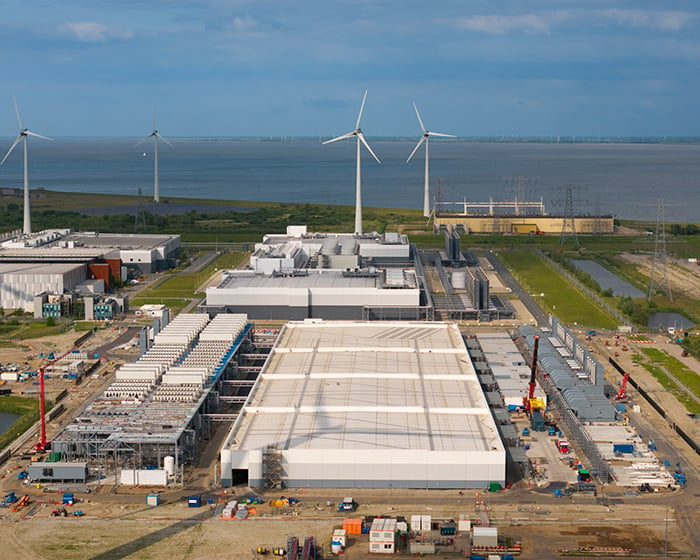
Data centers have long been among the most aggressively incentivized projects due to their massive capital investment and competition for high profile technology projects. However, that landscape is changing.
As energy consumption, grid strain, water usage, and limited long term job creation become more visible, many states are reassessing data center incentives. Some have rolled back, paused, or restructured programs, questioning whether the economic return justifies the infrastructure burden placed on local communities.
Minn. Bill Would End Sales Tax Break For Large Data Centers – Sanjay Talwani, Law 360($):
Under S.F. 4203, Minnesota would end its sales and use tax break for purchases by qualified large data centers, which are larger than 25,000 square feet in aggregate with total investment of at least $250 million. The bill would also eliminate the tax break for other qualified data centers that are larger than 25,000 square feet and located on a single contiguous parcel, instead allowing the break for smaller facilities and eliminating the requirement that the facility receive a $30 million investment.
Washington Lawmakers Consider repeal of Data Center Incentive – Paul Jones, Tax Notes ($):
In response to a budget proposal by Gov. Bob Ferguson (D), lawmakers are considering S.B. 6231, which would nix, beginning July 1, Washington’s sales tax exemption provided to data centers that undergo refurbishment.
That said, this does not mean data center incentives are disappearing altogether. While some states are pulling back, others continue to actively pursue these projects—often with revised structures, stricter requirements, or incentives tied to energy efficiency and long term commitments. In a competitive environment, projects that no longer work in one state may still be highly attractive in another.
Google confirms new data center development in Kansas City’s Northland – Heidi Schmidt, KCTV5:
[…]
The company is working with Evergy during the project. Google said it will cover the full energy costs associated with powering the data center.
The agreement is part of a new contract model Google says it is following as it develops future data centers. The model keeps customers from paying for infrastructure and high utility costs associated with the data centers, according to Google.
This is where early planning becomes critical. Incentive outcomes for data centers—and other energy intensive projects—are increasingly shaped by timing, location, and project structure. Reaching out early allows our team to help identify states and local jurisdictions that align with your project’s energy needs, growth plans, and long term objectives—before options narrow or opportunities are missed.
Next Up: How to Navigate the Process
Understanding which industries benefit—and where incentives are changing—is only the first step. In Part III, we walk through how the credits and incentives process actually works, including when to engage, how negotiations unfold, and what it takes to move from early planning to successfully realizing the benefit.
If your business is considering building, expanding, relocating, or hiring, understanding available state and local incentives early can make a meaningful financial difference.
To get started, complete our State Credits & Incentives Request for Assessment. The form takes approximately five minutes, and Matt Carlson will reach out to discuss potential opportunities tailored to your project.