
Key Takeaways
- With the global minimum tax out of the way, at least for now, digital taxes are taking center stage.
- Pillar One, the OECD’s attempt to tax online transactions, fell apart amid disagreements.
- Countries are pushing ahead with their own digital taxes, risking confrontation with the U.S.
- Fear of negating treaties snarls U.N. tax talks.
- Trump tariffs failing to reap promised rewards, analyst claims.
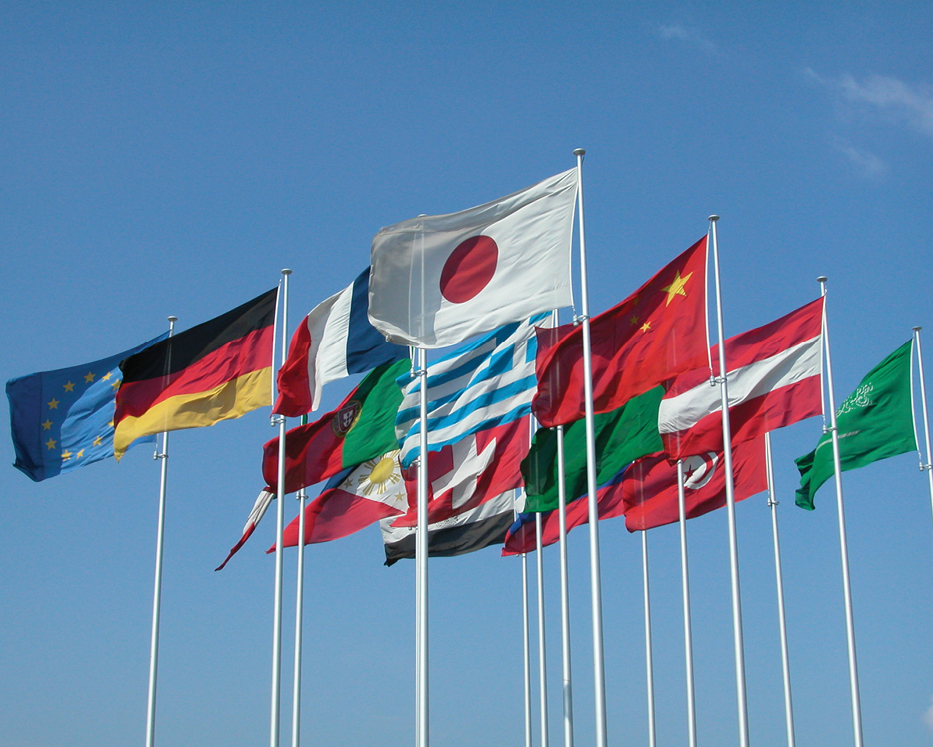
Now that the finalized global agreement has put the Pillar Two global minimum tax issue to bed—or at least, kept it off the headlines—the international tax world is slowly turning its gaze to the next high-stakes standoff: digital services taxes, and how to tax the online economy.
When the Organization for Economic Cooperation and Development was first tasked by the G-7 with tackling this issue nearly a decade ago, it grew into a two-pronged effort to capture both untaxed online transactions and low-taxed intangible profits. While the latter project turned into Pillar Two, the first project—Pillar One—dwindled and died on the vine. The OECD produced a multilateral convention to implement a new regime to tax a portion of all transactions in a market—whether they be online or in-person—the mega-treaty was never approved by the United States and never reached full consensus.
In the absence of a resolution, countries have gone ahead with DSTs—typically, taxes on revenue from certain online transactions such as e-retail, social media and data collection. The U.S. has strongly opposed these levies, claiming they are targeting the American tech industry. In his first term, President Trump initiated the process to enact retaliatory tariffs against countries with DSTs, but that was suspended while they sought an agreement at the OECD. Poland is the latest country to propose a DST, sparking more threats of retaliation.
Officials with the U.S. Treasury Department have said they want to pivot to the “digital economy,” but it’s clear that any effort to revive the specifics of Pillar One would be dead on arrival, and negotiators will need to essentially start over from scratch.
One significant wild card is that while Pillar Two was seen as disconnected from trade issues, there’s more overlap with DSTs. As taxes on revenue, not income, they bear more resemblance to tariffs. And the Trump Administration has sought to include a prohibition on DSTs in trade agreements at the European Union and elsewhere.
Given how controversial Trump’s trade moves have been around the world, any tax discussion near that sphere faces an extra level of complication and tension.
Noteworthy Items This Week
U.N. member states are meeting in New York through February 13 to negotiate a framework convention and two protocols, which they will need to present to the U.N. General Assembly by the second half of 2027. The General Assembly approved the terms of reference for the convention in December 2024.
Volkswagen Move to Vacate Onshoring Shows US Tariff Policy Flaws – Andrew Leahey, Bloomberg Tax:
This theoretically reorients the market by yanking on both the supply and demand levers until behavior shifts. Because such taxes are imposed to eradicate harmful behaviors, you’ll ostensibly be content if consumption falls to zero or close to it.
But trade tariffs are imposed to extract value, whether in the form of jobs, investment, or competitive pricing. Tariffs pretend to be corrective taxes, but they risk choking off the very economic relationships they’re supposed to leverage.
The Shadowy World of Foreign Tax Audits – Mindy Herzfeld, Tax Notes ($):
Although Treasury officials can appear in Paris to negotiate compromises to revise laws under which countries seek to assert additional taxes on U.S. multinationals, the solutions for the gray areas in which many foreign tax authorities operate are less obvious.
Pillar 2 Side-by-Side Safe Harbor: A Slightly Choppy Period – Lee A. Sheppard, Tax Notes ($):
The side-by-side safe harbor is awkward, as is the whole pillar 2 package. To fully understand what is going on, users need to look at the OECD consolidated commentary, in which the OECD drafters incorporated Business at OECD (BIAC) suggestions, but which, like the model rules, is not legally binding. Some jurisdictions have incorporated the model rules and commentary into law or as a reference, but in most countries these documents are meaningless. Beyond that, the whole premise of using book income as a foundation while rejecting its basic tenets to design an entirely new corporate income tax base is misguided.
Given that pragmatism has overtaken principle in reaching this deal, we see several policy and practical challenges for the UK and other European jurisdictions.
Public Domain Superhero of the Week
Every week, a new character from the Golden Age of Comics, who’s fallen out of use.
This week’s entry: Miss Masque
/arrow/blackangel/black_angel2/capt-triumph/wizard/duke_of_darkness_003/blackbul111/wildfire/yankee_girl_chesler/conqueror/black_hood/red-rube1/stuart_taylor/capt-flash/luckyman1/captainbattle/lightning/blackorchid1/masque.jpg)
Debut Year:1946
Debut Publication: Exciting Comics #51
Origin Story: A socialite who dons a mask and costume to fight crime and injustice.
Superpowers: Aside from twin pistols, she uses her intelligence and athleticism to beat the bad guys.
Eide Bailly's International Tax Team and our affiliates at HLB, The Global Advisory and Accounting Network, stand ready to assist with your worldwide tax needs.