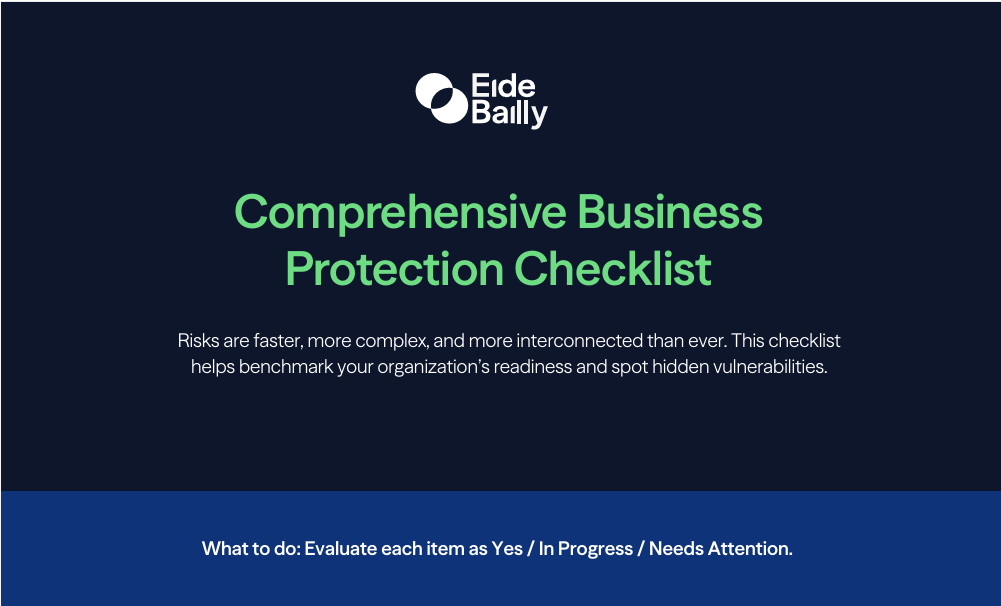
Is your organization truly protected against today’s risks?
Risk doesn't always arrive as a major disruption. It usually builds quietly through aging technology, inconsistent processes, evolving regulations, cybersecurity threats, and growing operational complexity.
Download our checklist to benchmark your organization’s readiness and uncover hidden vulnerabilities. This comprehensive, easy-to-use checklist will help you evaluate key areas of organizational resilience and identify opportunities to strengthen your approach to risk management, cybersecurity, compliance, operational continuity, and fraud prevention.
How Organizations Should Use This Checklist
The checklist walks through several core areas that contribute to organizational resilience and long-term stability, including:
- Business continuity and disaster recovery
- Cybersecurity and IT controls
- Financial controls and fraud prevention
- Compliance and governance practices
- Operational oversight and accountability
Rather than providing a formal risk score, the checklist is intended to help leadership teams assess current practices, identify areas for improvement, and prioritize next steps. It can be used as a starting point for strategic discussions or as a periodic review to ensure safeguards continue to align with organizational complexity.
Who This Checklist Is For
The Business Protection Checklist is designed for leaders responsible for managing risk, protecting resources, and supporting organizational performance, including:
- Executive leaders and senior management
- Finance and accounting leaders
- Operations professionals
- Technology and cybersecurity teams
- Compliance, risk, and internal control stakeholders
- Board members and governance committees
It's valuable for organizations of all types, including businesses, nonprofit organizations, healthcare organizations, educational institutions, and government entities navigating growth, change, or increasing complexity.
What’s Included in the Business Protection Checklist
The checklist highlights key protection areas organizations should revisit regularly. Inside, you’ll find:
- Actionable steps to strengthen business continuity and disaster recovery
- Key controls for IT health and cyber defense
- Compliance best practices to safeguard financial integrity
- Proven strategies for fraud risk oversight
- A practical action plan to turn your checklist results into real progress
Frequently Asked Questions
What is the Business Protection Checklist?
The checklist is a structured tool that helps organizations evaluate whether key safeguards, controls, and risk management practices are in place. It serves as a practical starting point for identifying potential vulnerabilities and opportunities to strengthen organizational resilience.
How is this different from a risk assessment?
A risk assessment is typically a formal process used to identify, analyze, and prioritize risks. This checklist is intended to support awareness and discussion by helping leaders identify areas that may warrant further evaluation.
When should organizations review protection efforts?
Many organizations review risk management and protection practices annually, during periods of growth, following significant operational changes, or when new regulatory, cybersecurity, or compliance requirements emerge.
Does this checklist replace audits, compliance reviews, or insurance coverage?
No. The checklist is designed to complement existing risk management activities by helping organizations identify questions and considerations that may require further attention.
Who We Are
Eide Bailly is a nationally ranked accounting and advisory firm bringing financial, operational, and technical solutions to middle market and high-growth organizations.