
Key Takeaways
- Lessons from another syndicated conservation easement loss in Tax Court.
- Supreme Court rules against Trump tariffs.
- State tax tug of war.
- DC filing season to continue despite Congress overruling district tax law.
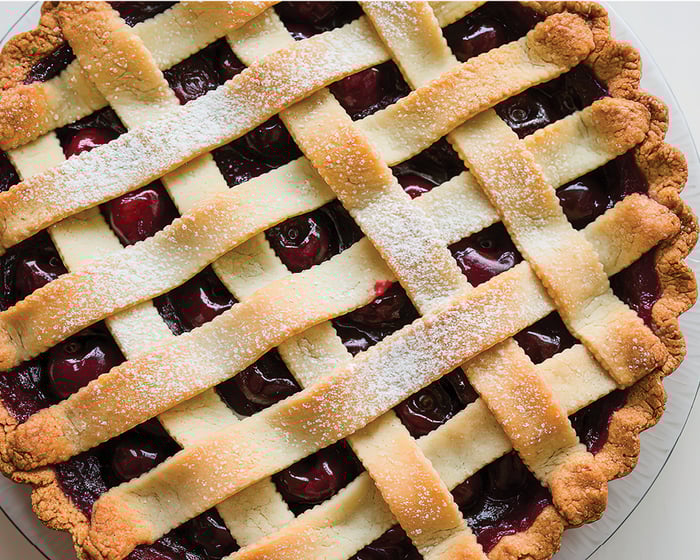
- National Cherry Pie Day.
- National Muffin Day.
Publication Note: Alex Parker usually covers Friday's here with a Capitol Hill recap, but he is taking a well-earned week off. We instead offer some thoughts on flaky tax shelters and why they find willing buyers, along with an abbreviated roundup on a slow news day (well, it was slow until the Supreme Court released its tariff decision).
Yesterday the Tax Court ruled against another syndicated conservation easement charitable claimed deduction from the deep south. Given the facts, a decision for the taxpayers would have been astonishing. Yet the taxpayers claimed the deduction, and even litigated it. The existence of the easement industry has important lessons for taxpayers. It also has some sobering implications for tax policy in general.
How easement shelters worked
The tax law allows a deduction for the creation of a qualified conservation easement. The easement, in very broad terms, is an agreement with a conservation non-profit where the donor contractually agrees to never develop a property subject to the easement. This reduces the value of the property, as no developer would want to buy it subject to the easement, and the donor is allowed a charitable deduction for the amount the value is reduced.
This inspired some entrepreneurs around the middle of the last decade. Their plan was to buy cheap land, identify a hypothetical highly-profitable use for the land, compute a land value based on the hypothetical use, enter into an easement to prevent the hypothetical use, and deduct the hypothetical value reduction.
In other words, assume a gold mine - or, in the case of yesterday's decision, a clay mine. All they needed was some available land, a creative appraiser, and taxpayers willing to finance the project in return for a share of the deduction. And neither appraisers nor tax-motivated investors were in short supply.
The Case
Yesterday's case involved a group of entrepreneurs who bought some land in Louisiana and parceled it out to sell, or "syndicate," to investors who would buy interests in a partnership holding a parcel for tax benefits. The parcel involved yesterday held 260.48 acres farmland purchased for $2,975 per acre, for a total cost of about $614,000. Assuming a profitable clay mine, the appraisal submitted with the partnership return claimed a charitable deduction of $439,492 per acre, or $115 million, for an easement created less than two years after purchase. This would represent appreciation of more than 14,000 percent. It would also ignore the actual sales price of the parcel and of any nearby land.
As it has in other syndicated easement cases, the Tax Court was unwilling to assume the gold mine. It pointed out why assuming the mine was dubious:
- Local zoning didn't allow a clay mine, and no efforts were made to change the zoning.
- There was no market for any clay that would have been produced by the mine.
I would have added: wouldn't somebody have figured out that they were sitting on a profitable mine and acted accordingly?
It took 66 pages, but the Tax Court allowed only $175,824 of the $114 million claimed deduction. It also imposed a 40% gross valuation misstatement penalty.
The easement battles continue after the war is lost
Congress reacted to the flood of easement shelters by limiting easement deductions to 250 percent of the basis of a property if held for less than three years (there's more to it, but that's the key provision). But hundreds of easement cases are pending in Tax Court, hoping for a judicial miracle, or maybe divine or presidential intervention. The easement wars leave behind wreckage including legal bills, disbarred appraisers, jailed professionals, and sadder but perhaps wiser investors.
It's a symptom
Despite the absurdity of the deductions claimed in these easements - "an industry based on nonsense," as tax blogger Peter Reilly points out - there were plenty of buyers. In the same way, plenty of people accept absurd claims they see on TikTok videos about how, say, Wyoming LLCs let you deduct all of your personal expenses as business costs.
The percentage of taxpayers with a good working knowledge of the tax law is tiny. As a proxy for who understands the tax law, you might start with the total number of licensed CPAs, enrolled agents, and attorneys in the US, which is in the neighborhood of 2 million. That is about 3/4 of one percent of the adult US population. While there are folks outside that group that have a basic grasp of the tax law, they are largely offset by folks with licenses but no such grasp.
In other words, to many, even most, taxpayers, the tax law is a total mystery. This makes them vulnerable to charlatans catering to wishful thinking. If you see someone on TikTok boasting about their deductible Lamborghini, and you have no understanding of the rules, you might have little patience for a tax professional who tells you that you can't even deduct your Toyota.
Is there a cure?
The best defense against tax charlatans is alert skepticism. Apply the old rule that "if it's too good to be true, it probably isn't." If you aren't sure, contact an actual tax professional, rather than TaxxGodd45472024@TikTok.com.
Long term, the real defense is a much simpler tax law - one that isn't riddled with promises of special tax breaks for this group or that, making the whole thing increasingly incomprehensible. Until that happy day comes, be careful out there.
Today's Tax Roundup
Supreme Court Strikes Down Trump’s Global Tariffs - James Rosmoser and Gavin Bade, Wall Street Journal:
The decision, written by Chief Justice John Roberts, removes a tool of diplomatic pressure that Trump has aggressively wielded to remake U.S. trade deals and collect tens of billions of dollars from companies importing foreign goods.
It is the first time the high court has definitively struck down one of Trump’s second-term policies. In other areas, the court’s conservative majority has so far granted Trump broad latitude to deploy executive power in novel ways, but a majority of justices—three conservatives and three liberals—said he went too far in enacting his most sweeping tariffs without clear authorization from Congress.
Three conservative justices—Clarence Thomas, Samuel Alito and Brett Kavanaugh—dissented.
Link: Supreme Court Opinion.
The opinion apparently doesn't address how refunds will be dealt with. We will cover more implications of the decision in Monday's roundup.
Common tax return mistakes to avoid - IRS:
- Filing too soon: Most tax documents should have been received by now, but taxpayers need to be sure they have all their tax reporting documents before filing. The fastest and easiest way for taxpayers to view their tax records is by logging on to their IRS Online Account.
- Incorrect filing status: Be sure to select only one filing status and make sure it is the correct one. What is my filing status? can help with the determination.
- Inaccurate information: Taxpayers should carefully when entering any wages, dividends, bank interest and other income they receive to make sure they report the correct amounts.
I'll never understand the phrasing mistakes "to avoid." It implies that there are other mistakes that you should seek out.
A State Tax Tug of War: The Latest State Tax Legislative Developments - Melissa Menter and Colette Sutton, Eide Bailly:
D.C. Filing Season to Continue for Now Despite Block on Decoupling - Cady Stanton, Tax Notes ($):
The local legislation — now overturned by Congress — had decoupled 13 tax-related provisions from the OBBBA, including the elimination of taxes on tips and overtime, the increased standard deduction, and the permanent reinstatement of 100 percent bonus depreciation.
But the city’s top tax official said in a February 19 statement to Tax Notes that the District’s filing season will continue unaltered for now.
What Day is it?
It's National Cherry Pie Day and National Muffin Day. So much winning!